
Best Student Recorders for School Music Classes
The best student recorders are easy to play, comfortable for smaller hands, simple to clean, and durable enough for regular travel between home and school. For most beginners, that means a soprano recorder in C with clear fingering markings, dependable tuning, and a washable plastic body. A wooden instrument can offer a warmer tone, but it usually requires more careful handling and is rarely the most practical first choice for a busy classroom. The right recorder should support good habits without making a new player worry about delicate parts or complicated maintenance.
Features That Matter in a School Recorder
Start with the instrument’s fingering system. A Baroque, or English, fingering recorder is the common choice for school instruction and is usually the safest match for classroom books and teacher demonstrations. Some inexpensive instruments use German fingering, which can be easier for a few early notes but may not align with the method used at school. Check the product description before buying, especially when the listing uses vague terms such as “beginner recorder.”
A recorder should also have accurately placed tone holes and a mouthpiece that feels smooth rather than sharp or rough. Molded plastic is not automatically poor quality; a well-made plastic instrument can be more consistent than a badly finished wooden one. Look for a recorder that separates into three sections, since this makes cleaning easier and allows the player to adjust the lowest joint for comfortable hand positioning. A protective case, cleaning rod, and fingering chart are useful inclusions, but they should not distract from the basic quality of the instrument itself.
Do not confuse music accessories with unrelated specifications in marketplace listings. An XLR connection belongs to audio equipment, not an acoustic recorder, while a charger is relevant to an electronic instrument or recording device rather than a traditional soprano recorder. The same applies to claims involving an HD DVD; that format has no bearing on a recorder’s pitch, response, or classroom suitability. If a listing combines these terms with a musical instrument description, read the details carefully to make sure you are buying the intended product.
Plastic Versus Wooden Student Recorders
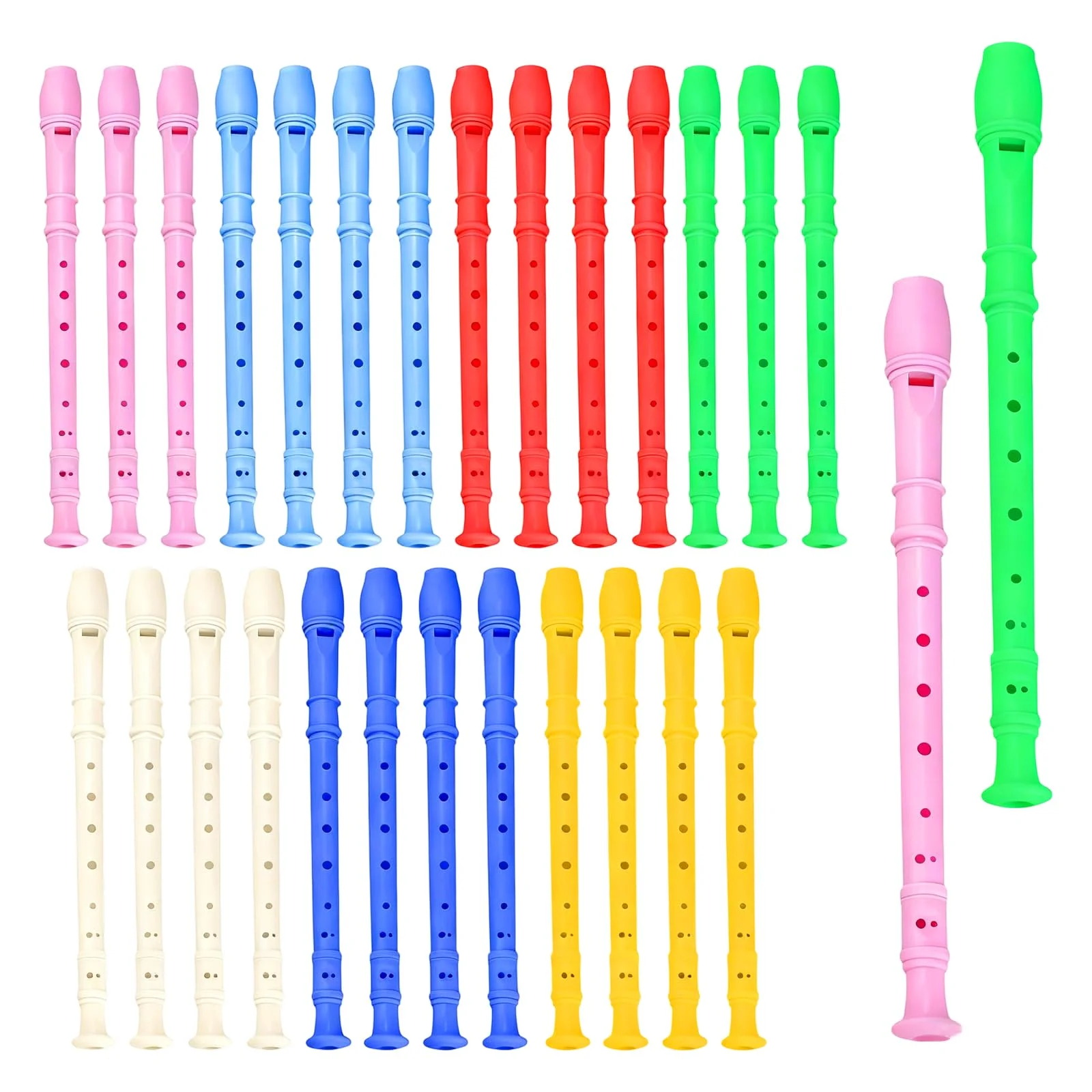
Plastic recorders are generally the best option for a first-year student. They tolerate drops, temperature changes, and the occasional overenthusiastic cleaning session better than wood. Plastic is also nonporous, so it can be washed according to the manufacturer’s instructions and shared less anxiously within a supervised classroom. Its tone may be slightly more direct or bright, but that is usually an advantage when a teacher needs to hear a class of beginners clearly.
Wooden recorders can produce a more nuanced sound and may feel especially rewarding once a player has developed steady breath control and reliable fingering. They are more sensitive to moisture, however. A wooden body may need gradual warm-up before playing, careful drying afterward, and storage away from radiators, cars, and other hot or damp locations. Cracking is a real risk when a wooden recorder is exposed to sudden changes in temperature. For most elementary and early middle-school players, plastic offers the better balance of sound, resilience, and cost. A wooden model makes more sense when the student is committed to continued study and is prepared to follow a stricter care routine.
Best Soprano Recorders for Classroom Use
Tips for Starting Recorders in Elementary Music
The standard soprano recorder is pitched in C and is the instrument most often assigned in general music classes. Its compact size suits younger players, and its fingering patterns provide a manageable introduction to melody, breath control, articulation, and reading notation. When comparing models, prioritize a stable low register and notes that speak without excessive force. A recorder that responds only when the player blows hard can encourage poor technique and make ensemble playing difficult.
For a school setting, a three-piece plastic recorder with Baroque fingering is often the most sensible specification. A curved or adjustable foot joint can help smaller hands reach the lowest holes, although a straight joint is perfectly workable for many players. Some instruments include double holes on the lower joint to improve the accuracy of certain notes. This is a useful feature, but it should not outweigh reliable tuning, comfortable hole spacing, and a mouthpiece that feels natural.
When two options appear similar, compare what is included and what can be replaced. A case that closes securely is more valuable than a decorative box, and a recorder with an available replacement body or joint may be more economical over several school years. If the product page does not identify the fingering system, pitch, number of sections, or cleaning method, treat that missing information as a reason to keep looking rather than assuming the instrument will match classroom requirements.
For the two catalog picks that may appear with this guide, compare them by practical strengths and limitations rather than by star ratings alone. One may offer a lower price and a complete accessory set, while the other may have more dependable construction, a better case, or a more comfortable joint design. The cheaper option can be sensible for a short-term class requirement, but a slightly higher-priced recorder may be better value if it is easier to clean, less likely to leak air around the joints, and more likely to remain useful as the student progresses.
Easy-Care Recorders for Young Players
Recommended products
Use these catalog picks as a shortlist for best student recorders for school music classes. Compare measurements, materials, and return terms side by side instead of buying from a photo alone.



A simple care routine makes a bigger difference than many buyers expect. After playing, separate the recorder if the design allows it and remove moisture with the supplied cleaning rod and a soft, lint-free cloth. The cloth should be secured so it cannot detach inside the bore. Do not force a thick cloth through a narrow passage, and do not leave the instrument assembled in a sealed case while it is still damp. Persistent moisture can affect response and encourage unpleasant odors, even in plastic instruments.
Washable plastic recorders can usually be cleaned with mild soap and lukewarm water, but the manufacturer’s instructions should take priority. Avoid boiling water, abrasive cleaners, alcohol-based products, and sharp objects around the tone holes. Never use cooking oil or household lubricant on recorder joints unless the maker specifically recommends a suitable product. Greasy residue can migrate into the bore and make the instrument harder to handle. If a joint becomes loose, a purpose-made recorder joint compound may help, but a badly fitting joint should be inspected or replaced rather than repeatedly forced.
Young players also benefit from a storage rule that is easy to remember: dry the recorder, put every section in its case, and keep the case in a predictable place. A name label on the case reduces mix-ups when several similar instruments are collected at school. Avoid leaving the recorder in a backpack under heavy books, since pressure can damage the case or distort a joint. These small habits protect the instrument and make it more likely to be ready for the next lesson.
Cleaning and Storage Supplies to Buy
The essential supplies are modest. Choose a correctly sized cleaning rod, a soft absorbent cloth, and a ventilated case or pouch that protects the recorder from dust and crushing. A spare cloth is useful if the instrument travels between school and home. For wooden recorders, follow the maker’s guidance about bore oil and drying time instead of applying products on a fixed schedule. Plastic models generally need less maintenance, so a basic cleaning kit is usually sufficient.
Be cautious with generic accessory bundles. The word Generic may describe a perfectly usable case or cloth, but it does not tell you whether the accessory fits the recorder or is made from suitable materials. Brand names such as Lorex and SANNCE may appear in broad marketplace searches for cameras or electronics, yet they are not meaningful indicators of recorder quality. Check the actual instrument specifications, the seller’s return policy, and whether replacement parts are available. A clear product description is more useful than a familiar-looking label.
Ultimately, the best school recorder is the one that matches the teacher’s fingering expectations, fits the student’s hands, and can survive ordinary classroom handling. For most beginners, that means a well-built plastic soprano recorder in C with Baroque fingering, a secure case, and straightforward cleaning instructions. Spending a little time checking these details before purchase can prevent poor fit, confusing fingering systems, and unnecessary replacement costs later.